
Double Dutch: Curating Relation Across the Caribbean
Double Dutch: Curating Relation Across the Caribbean is a sustained curatorial programme initiated in 2015 at the National Art Gallery of The Bahamas, fostering intentional intra-Caribbean exchange between artists, institutions, and contexts separated by colonial borders and linguistic divisions. Resisting reductive regional identity, it models the Caribbean as a space of multiplicity and relation. Now in its tenth edition, it stands as a vital form of Caribbean cultural infrastructure built on care, continuity, and courage.
Many thanks to Jodi Minnis-Rolle for the invitation to reflect on the legacy of Double Dutch and its relational role across the Caribbean. This essay will be featured in the upcoming publication from the National Art Gallery of The Bahamas, documenting the last ten iterations of the programme.
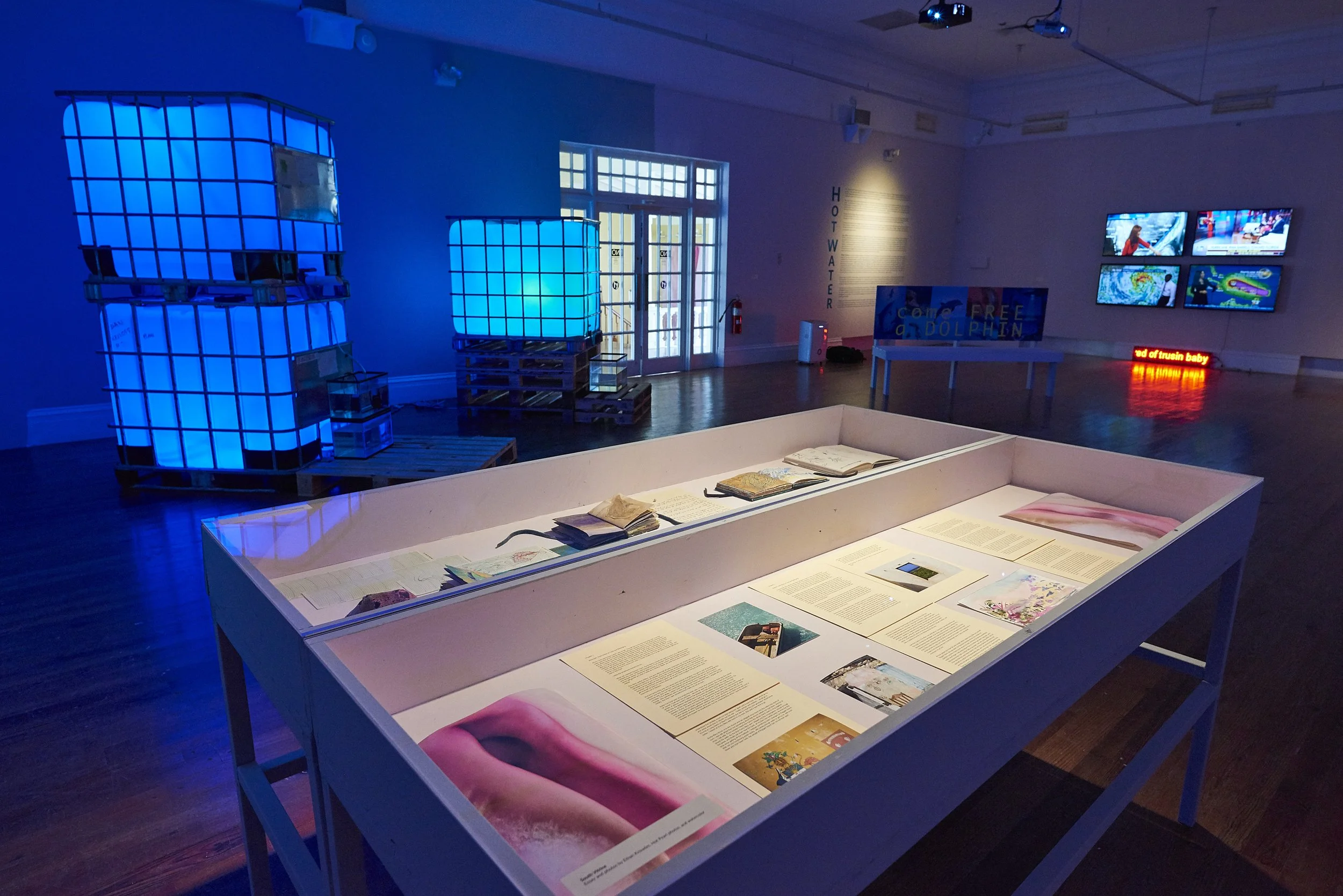
Double Dutch emerged not merely as an exhibition concept but as a sustained curatorial commitment to intra-Caribbean dialogue, investigating how national institutions can foster lateral exchange across the region. Since its inception in 2015, the project has questioned what it means for Caribbean institutions to engage with regional and diasporic artists laterally, intentionally, and over time. Fundamentally, Double Dutch focuses less on pairing artists for comparison and more on pairing contexts, histories, and conditions of practice that are frequently separated by colonial borders, linguistic divisions, and inherited institutional habits.
The project was conceived at a time when Caribbean artists gained increasing visibility on international stages, yet opportunities for meaningful regional exchange within institutional settings remained limited. Although artists participated in biennials, residencies, and exhibitions in Europe and North America, Caribbean-to-Caribbean dialogue was often informal, under-resourced, and overshadowed by outward-facing priorities. Double Dutch aimed to address this imbalance by asserting that intra-Caribbean exchange is not supplementary to institutional programming but essential to the formation, debate, and sustenance of Caribbean art histories.
National institutions in the Caribbean occupy a distinctive position. They are responsible for narrating national identity while operating within a region shaped by migration, entanglement, and shared histories of colonialism and resistance. This positioning generates both opportunities and tensions. To act responsibly, these institutions must cultivate an ethos attentive to local histories and audiences while remaining open to regional exchange. This necessitates ongoing critical awareness of the formation of national frameworks and how they might be reimagined in practice rather than assumed fixed.
Double Dutch was developed as a response to this challenge. As a recurring summer programme during my tenure at the National Art Gallery of The Bahamas (2015–2019), it established a structured yet flexible space for encounters, bringing together local, regional, and diasporic artists around shared constellations of ideas. Instead of prescribing a unifying theme, the programme allowed artists’ practices to engage in relation to one another, affirming that meaning often emerges through proximity, contrast, and dialogue.