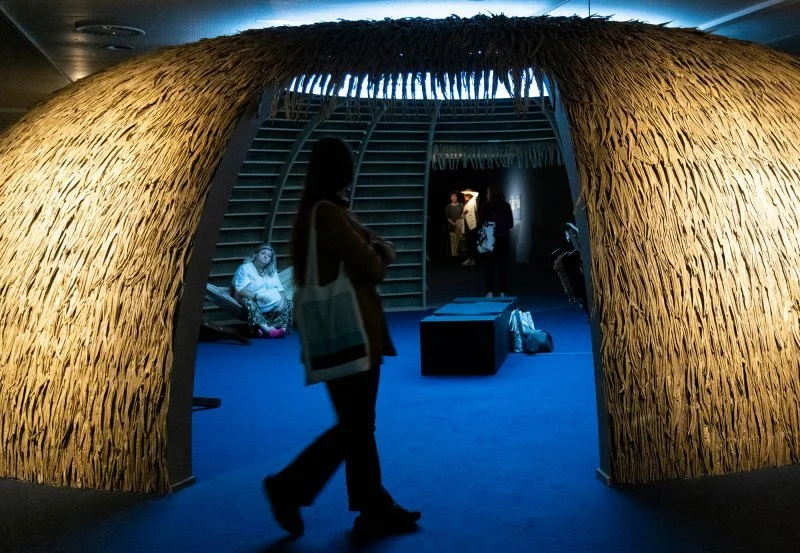
Calabash Transmissions and Cosmotechnics: World-Making in Tabita Rezaire’s Des/astre
This writing explores Des/astres (2024) by Tabita Rezaire as a cosmotechnical installation rooted in African and Indigenous epistemologies. Through the symbolic force of the calabash and the spatial practices of rest and ritual, Rezaire enacts a decolonial, pluriversal pedagogy in which ancestral technologies reconfigure knowledge, time, and the cosmic order.
The full essay is printed in WMW NOW #1: Tabita Rezaire, published by KHM-Museumsverband, Vienna, Austria.
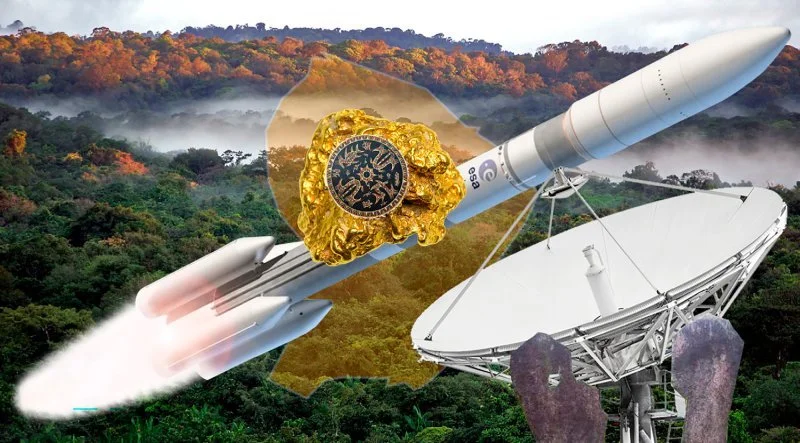
Tabita Rezaire. Nebulosa de la calabaza. Des/Astres, 2024
Still from the video installation. Courtesy of Tabita Rezaire and Goodman Gallery.
Calabash Transmissions
Tabita Rezaire's Calabash Nebula references a stellar formation located approximately 5,000 light-years from Earth in the constellation Puppis. The nebula's shape is a result of a dying star expelling its outer layers, a transitional phase before it evolves into a planetary nebula, which will gradually dissipate over tens of thousands of years. This astronomical connection is unsurprising, given that Rezaire's practice is deeply attuned to the skies and rooted in sustained engagement with African and Indigenous cosmologies. Through embodied research and celestial observation, she explores how these ancestral systems of knowledge function as liberatory technologies.
Located on the Mahury mountain in French Guiana, Reziaire's transdisciplinary centre, Amakaba, engages in a broad spectrum of land and body-based healing practices. One of its defining pillars is its sustained relationship with the sky and its cosmologies. Rooted in Amazonian epistemologies, Amakaba cultivates a space for celestial observation and spiritual attunement through gatherings and rituals based on Earth and cosmic principles. These practices underscore Rezaire’s commitment to honouring cosmic cycles as fundamental to ecological balance and spiritual well-being.
Rezaire positions the sky as a site of observation and a spiritual and pedagogical terrain through which guidance, timekeeping, and intergenerational transmission occur. Transmissions in Rezaire's work can look like community-based ethnographic approaches capturing stories from populations that share the waters of the Amazon, mainly those from French Guiana, Suriname and Brazil, working with dreams and messages from the ancestral realm, or iconographic play with media, collage and textural compositions that disrupt linearity making layered stories elevating the power and urgency of the polyvocal.
It comes as no surprise, then, that the calabash, long a vessel of memory, healing, and cosmological balance in many African and Indigenous traditions, functions as a world-making symbol representing existence itself while informing the exhibition's function as a container for diverse systems of knowledge and inquiry. By integrating spiritual and planetary materials, Rezaire opens up a third space of cosmology, which Marisol de la Cadena refers to as a "world-making practice" that cannot be reduced to either modernity or tradition.
In the Yoruba tradition, rooted in West Africa and carried across the Black Atlantic into the Americas, origin stories serve both didactic and disruptive functions. Within these sacred narratives and parables (patakis), Yoruba deities (Orishas) are often portrayed as complex, even fallible beings whose actions reveal layered moral, spiritual, and historical truths. One Yoruba creation story describes the Orishas Oduduwa and Obatala as co-inhabitants of the cosmic calabash known as The Calabash of Existence (Igba Iwa). In this cosmological schema, Oduduwa is associated with the nurturing lower half of the gourd, symbolically aligned with the mother figure (Iya Agbe). Obatala resides in the upper portion of the calabash and is associated with offspring and masculine potential, aligning with the principles of creation, order, and the unfolding of life. More than a utilitarian container, the calabash is revered as an embodiment of the womb and the world, linking feminine power with the structure of the universe itself.
According to the Odu Ifá Osa Meji, the Supreme being in the Yoruba Pantheon (Olódùmarè) bestowed the sacred power of spiritual and divine wealth (àjè) upon a female Orisha, placing this potent spiritual force under the guardianship of women and enclosing it within a calabash, thereby becoming the repository of sacred feminine energy, a site of spiritual authority, and ancestral wisdom. The calabash stands as a potent symbol of the divine feminine in Yoruba and Indigenous ontologies, serving as both a structural and imaginative tool for world-making, opening the thresholds of flesh and spirit, bridging the living world and the realm of the ancestors. It serves as a receptacle for medicines, offerings, and spiritual energies, while also acting as an instrument of healing and divination. In many African Traditional Religions (ATRs), the calabash serves as a vessel for the materials of initiation, including water, flowers, ebbo (offerings), and libation, underscoring its role as a conduit for spiritual transformation and becoming.