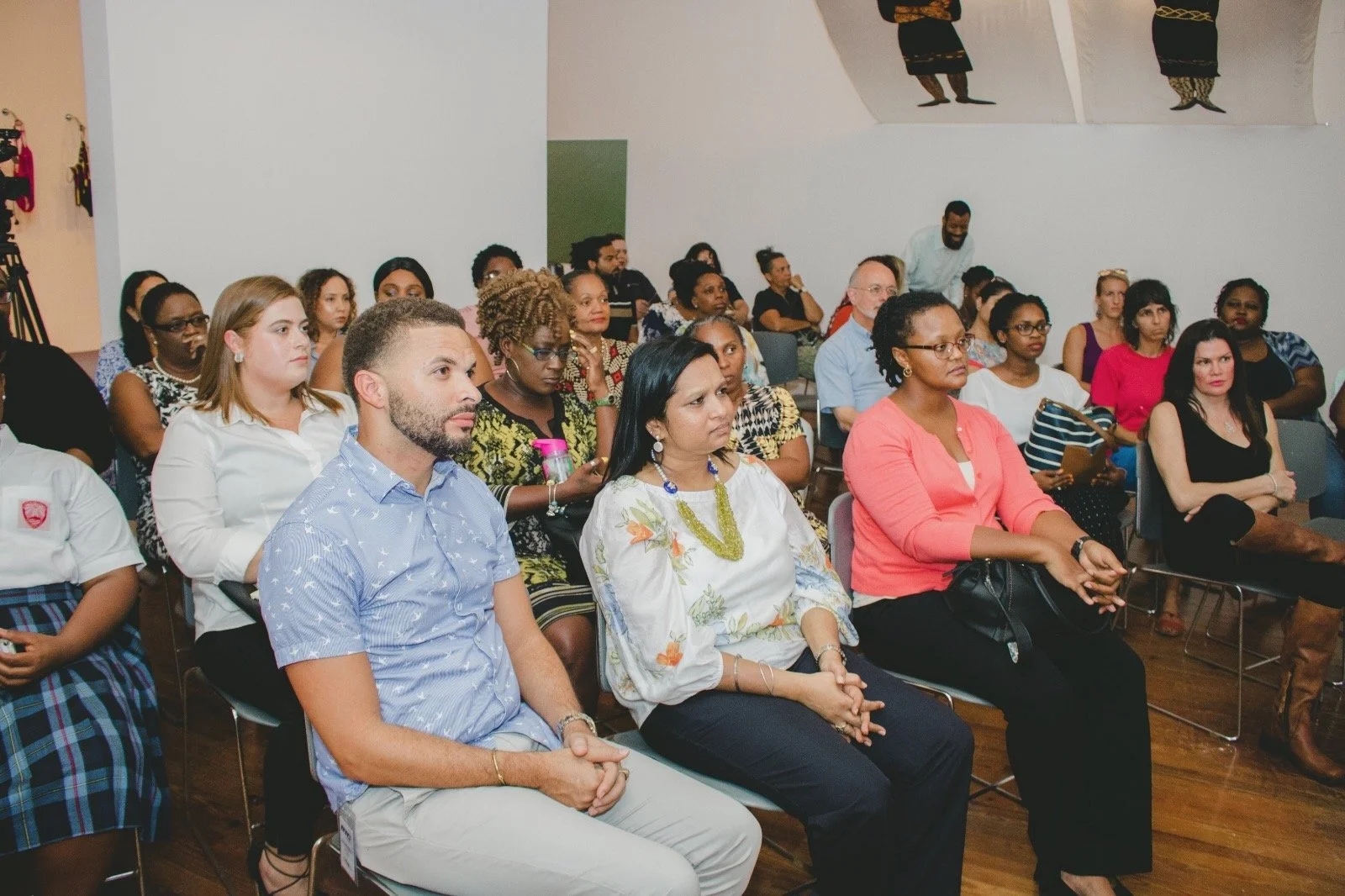
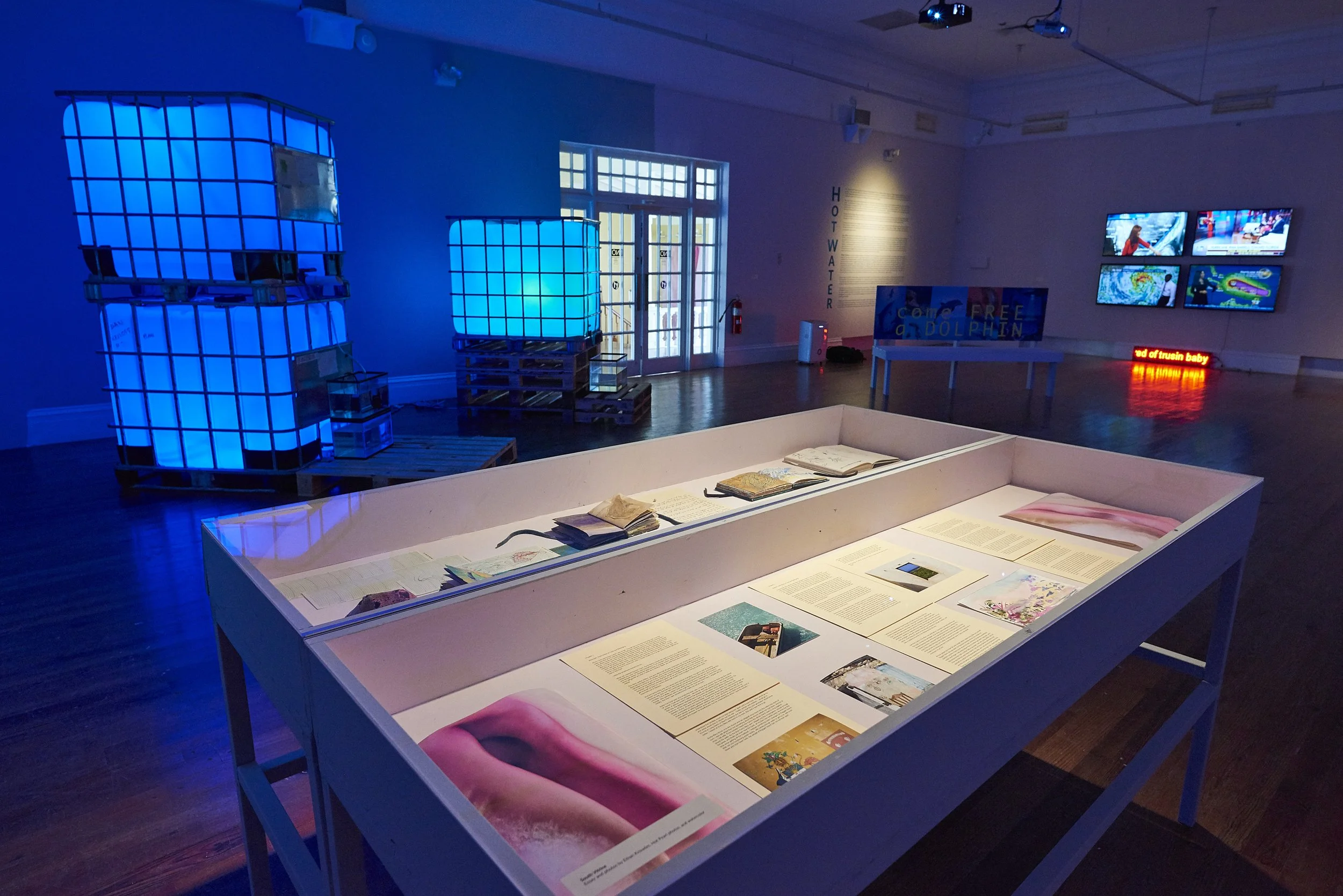
Double Dutch: Curating Relation Across the Caribbean is a sustained curatorial programme initiated in 2015 at the National Art Gallery of The Bahamas, fostering intentional intra-Caribbean exchange between artists, institutions, and contexts separated by colonial borders and linguistic divisions. Resisting reductive regional identity, it models the Caribbean as a space of multiplicity and relation. Now in its tenth edition, it stands as a vital form of Caribbean cultural infrastructure built on care, continuity, and courage.
Many thanks to Jodi Minnis-Rolle for the invitation to reflect on the legacy of Double Dutch and its relational role across the Caribbean. This essay will be featured in the upcoming publication from the National Art Gallery of The Bahamas, documenting the last ten iterations of the programme.
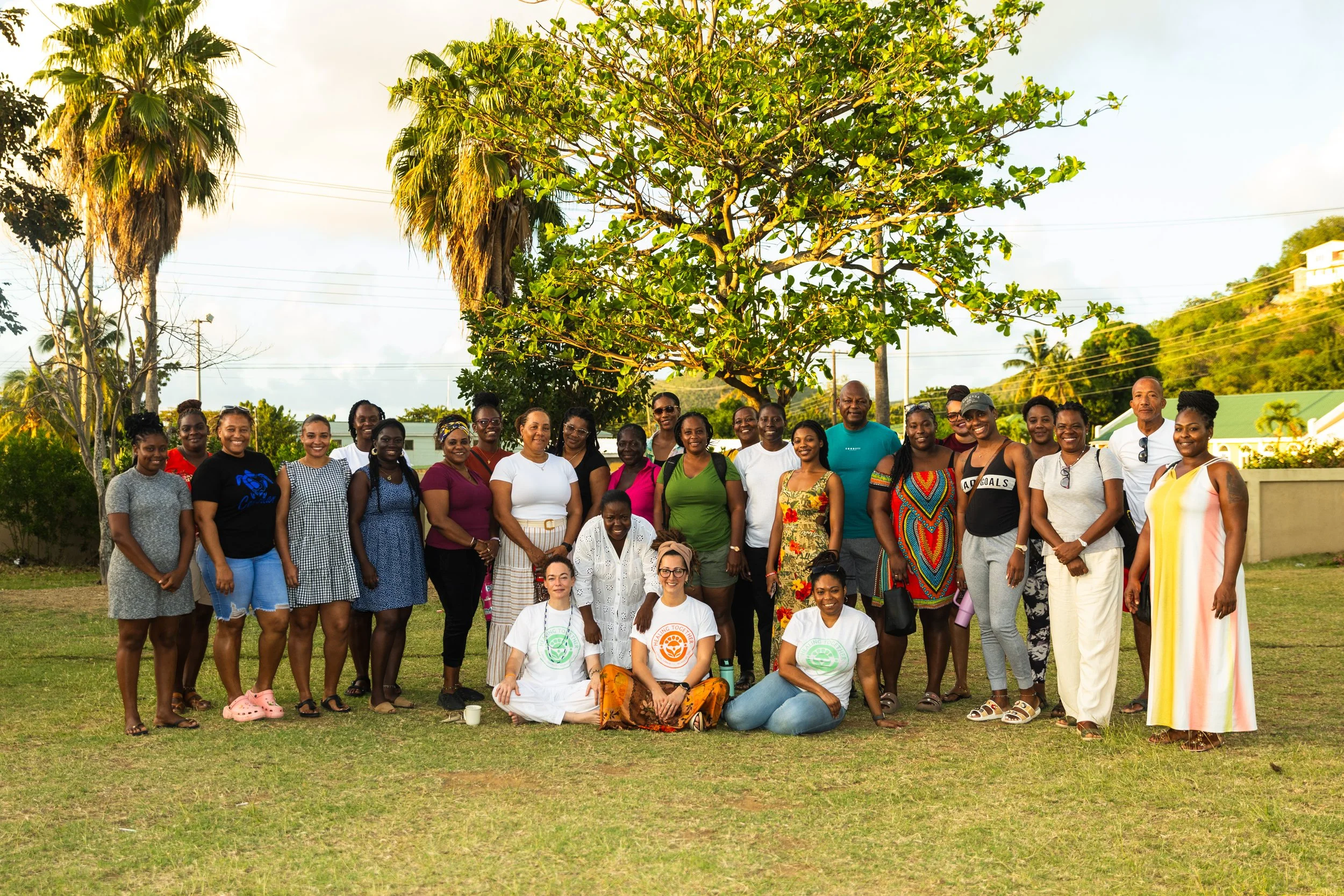
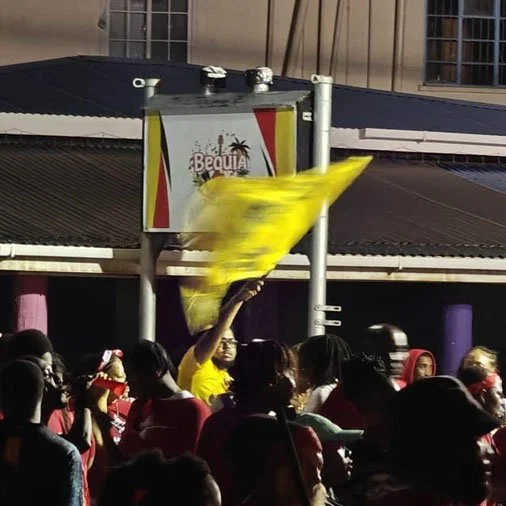
Healing Together is a collaborative psychosocial initiative between The Hub Collective Inc. and MindTHRIVE Co., developed in response to Hurricane Beryl's devastation across SVG in 2024. Delivered by local practitioners across Mayreau, Union Island, and Bequia, it integrates Psychological First Aid, counselling, peer support, and nature-based practices within a trauma-informed, culturally grounded framework. The project argues for a shift from clinic-bound mental health models toward collective, place-based care systems suited to Caribbean SIDS facing recurrent climate shocks.
Read MoreAfter 24 years of political dominance, St. Vincent and the Grenadines experienced a decisive democratic rupture in the 2025 election. This essay reflects on the psychological unravelling of authoritarian governance and the opportunity now facing the nation: to rebuild civic life, decentralise power, strengthen ecological and food sovereignty, guard against foreign influence, and cultivate a political culture grounded in accountability, participation, and collective care.
Read MoreThis writing explores Des/astres (2024) by Tabita Rezaire as a cosmotechnical installation rooted in African and Indigenous epistemologies. Through the symbolic force of the calabash and the spatial practices of rest and ritual, Rezaire enacts a decolonial, pluriversal pedagogy in which ancestral technologies reconfigure knowledge, time, and the cosmic order. The full essay is printed in WMW NOW #1: Tabita Rezaire, published by KHM-Museumsverband, Vienna, Austria.
Read MoreSanctuary After the Storm: A Toolkit of Repair Work for Caribbean Museums reflects on a co-creative psychosocial healing initiative piloted by the National Art Gallery of The Bahamas following Hurricane Dorian in 2019. Drawing on art therapy, community care, and ancestral healing practices, the initiative reached over 2,000 Bahamians and Haitians, 90% first-time visitors. The essay argues that Caribbean cultural institutions must centre care, interconnectedness, and community sovereignty as foundational acts of decolonial practice.
This paper was presented at the 47th ICOFOM Symposium in 2024, as part of an international convening on ecological museology, archipelagic heritage, and the role of museums and cultural institutions in responding to climate emergency and community care.
Read MoreIn this report first published on Global Voices, The Bridge, Bynoe asks critical questions of island communities across the Grenadines: can they co-visualise positive changes as disaster capitalism, land grab, and the threats of gentrification, ‘organised abandonment’ and ‘Build Back Better’ loom?
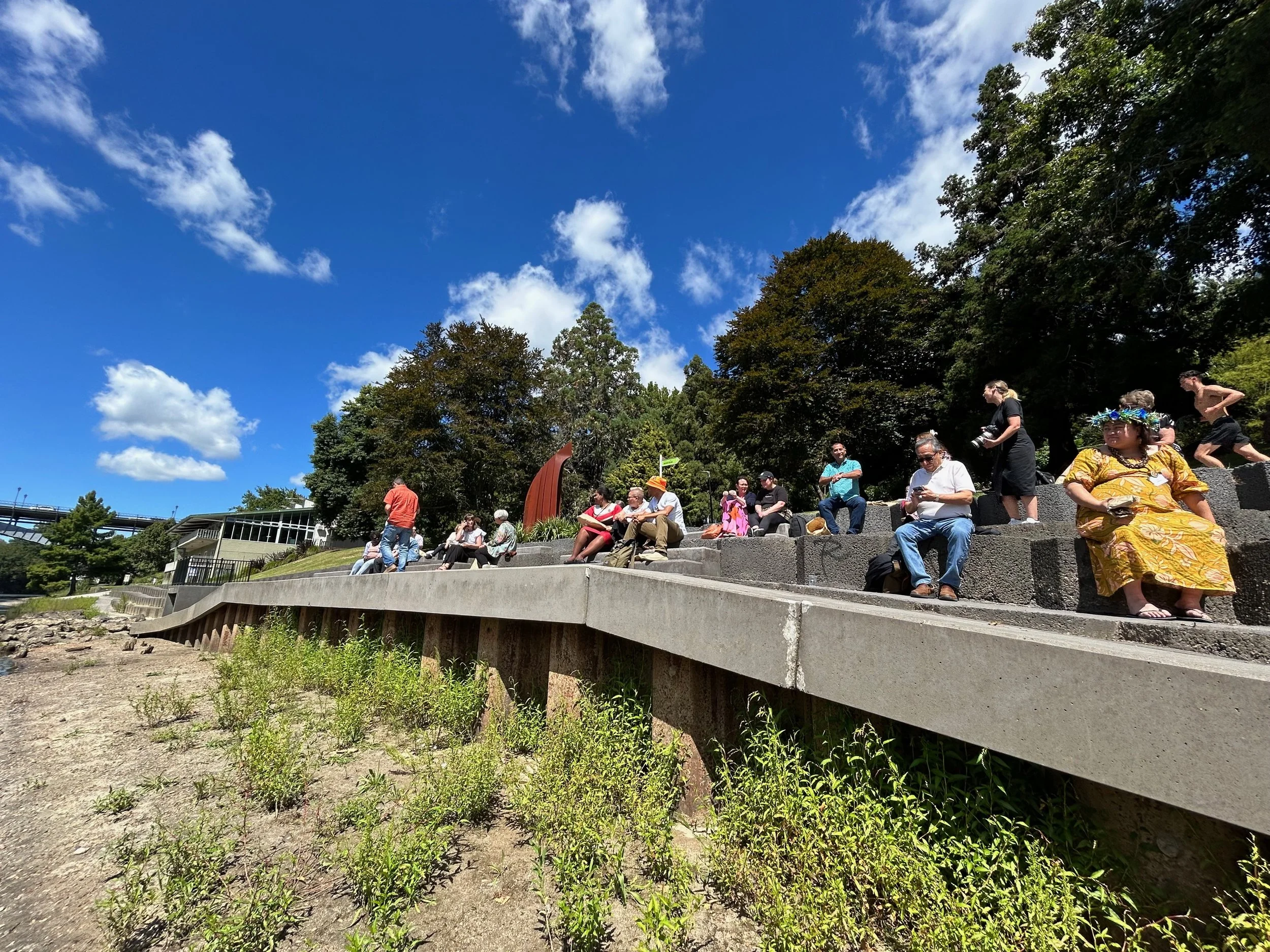
Read MoreBynoe shares on her experience at the recently convened Commonwealth Association of Museums (CAM) 2024 Triennial Conference whose theme ‘The View From Here: Sustainability, Community and Knowledge Systems,’ welcomed delegates from the four corners of the globe. Hosted in Auckland, Aotearoa, from March 3rd to 8th, under the radical hospitality and care of the Auckland War Memorial Museum and the Waikato Museum, these observations summarise important questions raised during the gathering around the possibility of decolonisation, aspects of collaboration, guardianship and community engagement.
Read MoreVictoria Lee writes about my PhD Research for the University of St. Andrews’ Research and Impact in ‘Sacred Space and Social Memory’: lessons from the land in the Grenadines and the Isle of Skye.
Read MoreCan scarcities and climate vulnerabilities offer us other ways of being and imagining? How are government-accessed funds, initiatives and projects being implemented and communicated to the public? How are these actions impacting community-based organisations and grassroots initiatives that have historically engaged in change-making work in their locales? Are there sufficient incubation projects accommodating habitat creation, ecological education, or invasive species management?
Read MoreThis is the first instalment of a two-part post under the Shared Island Stories initiative, supported by the School of Art History at the University of St. Andrews in Scotland, which explores ways in which to build collaborative tools to inform case studies in support of the project “Sacred Space and Social Memory: Interrogating Co-becoming in Community-Based Practices in the Grenadines and the Isle of Skye.” Funded by UK Research and Innovation (UKRI) with project reference: EP/X023036/1. Many thanks to Janine Mendes Franco and Skye Hernandez for the editing assistance and publishing on Global Voices ‘The Bridge.’
Read MoreHealing and self-healing thematics are emerging frequently in the creations and reflections of artists. Many thanks to Dominique Brebion of AICA-South Caribbean for offering the space to expand on how the thematics of healing operates in my eco-social art practice.
Read MoreSour Grass has been invited to participate in the summer seminar “Towards Perma-Cultural Institutions: Exercises in Collective Thinking” curated by Aneta Rostkowska, Nada Rosa Schroer and Julia Haarmann at Stiftung Künstlerdorf Schöppingen in Germany.
Read MoreLate in 2021, Women On the Move (WeMOV) invited me to be one of their stakeholders. WeMOV is a network of researchers engaged in the timely mission of unveiling women migrants' presence and participation in the construction of Europe. As an artist, curator, and writer, who sits on the periphery of these engagements, the following conversation celebrates borderlessness through all veins of my life.
Read MoreNatalie McGuire-Batson writes for Issue 2 of Faire Mondes on curatorial approaches across the Caribbean region that have challenged and dismantled exclusionary global frameworks in visual art engagement. Nestled within this conversation with Annalee Davis and Katherine Kennedy, we discuss the collaborative projects that have birthed diverse archipelagic connections in an attempt to expand self-determination in a Caribbean curatorial context.
Read MoreArtist, spiritualist and medicine woman Holly Bynoe’s film still of the gentle movement of wild cane fronds, or ‘arrows’ from How to Sway on Crick Hill (2020), draws on her deep interest in the spiritual and healing properties of plants, regenerative agriculture and ways of undoing the ‘plantationocene’. A Strange Kind of Knowing will explore nuance, intuition, the land, environmental cycles and phenomena.
Read MoreIt is an honour to share this interview with writer, shaman, healer and my SiStar, Helen Klonaris. In "Catching Spirit," I sit at the feet of my elder as she shares on the uprising of ancestral technologies how to resource one's self through the dark night of the soul while sharing practices around trauma-healing and restoration/reparation. Helen opens her heart space and looks gently and candidly at the Caribbean's evolving social, developmental and spiritual ecosystems, expanding perspectives on how alternative healing methods and processes can innovate our strategies of thrival.
Read MoreA part of work as Generator for The Hub Collective, this decolonial story of Bequia's ripe history starts with a look into the Indigenous Era, moving through the vagaries of the colonial battle for the Grenadines. Starting with piracy, the Black Carib uprising against the British and French and early settlements, we move through the rise of the whaling industry and our creative sea-faring resilient culture.
Read MoreCurator and spiritist Holly Bynoe reflects on the expansion of Obeah, a belief system of the Caribbean Black communities, and its relationship with women and their ancestral heritage to continue exercising care in the face of colonial extermination.
Read MoreThe Caribbean, with its history of colonisation and the eventual independence for most countries, is already mostly out of opportunities with regards to its timeline of development in conjunction with the new world. The trauma of post-colonisation and the current wave of investment further strips away our integrity and humanity. It is crucial for these development and social initiatives to work in context with the situations that they find on the ground.
Read MoreThe University of The Bahamas Visual Arts and Design (VAD) Department will be hosting 'Arts Beyond The Classroom', a virtual panel highlighting social arts initiatives in the Caribbean on Thursday, April 8th from 6:00 pm (EST). The panel is part of VAD’s 2021 event series "Pedagogical and Perceptual Shifts."
Read More